
Virtual Greyhound Racing: How It Differs from Live
 Available in US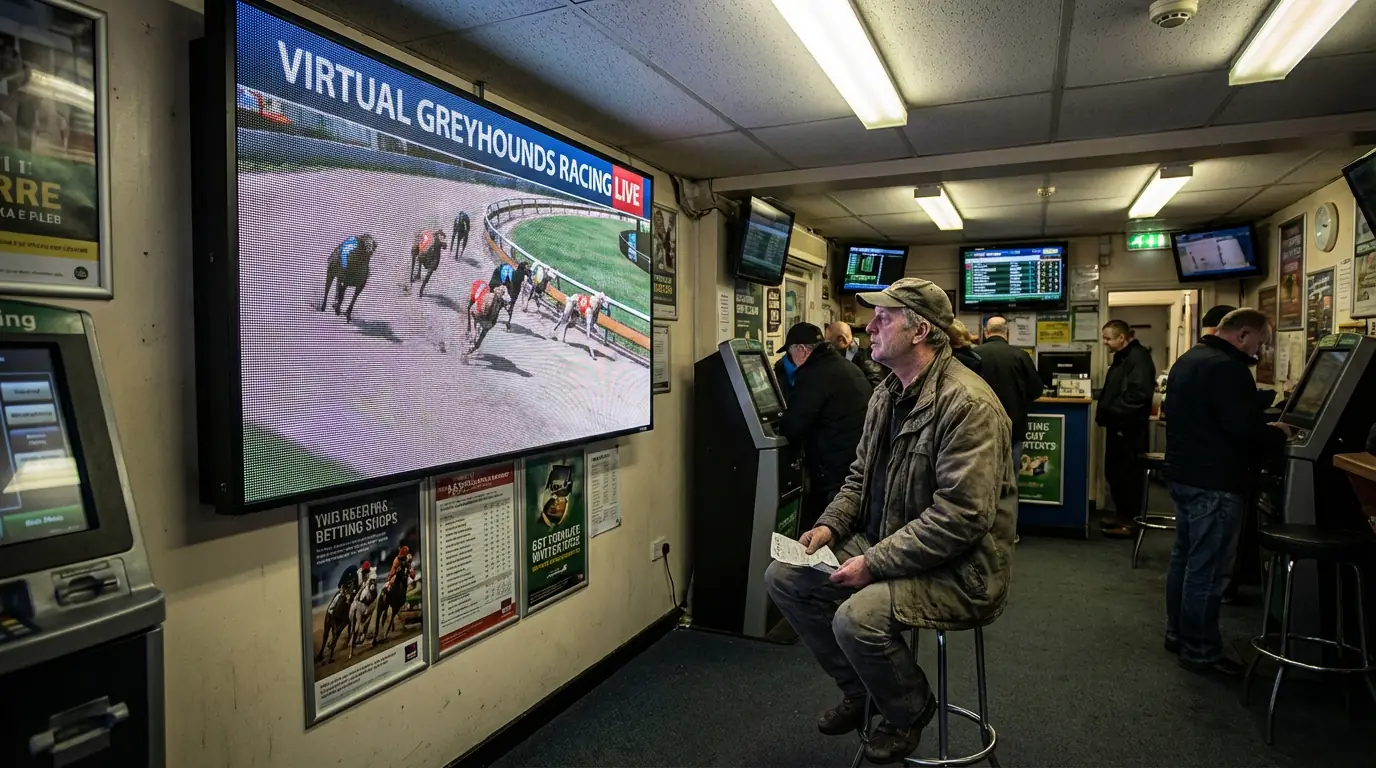
Same Screen, Completely Different Product
Virtual greyhound racing looks like greyhound racing. The animated dogs break from traps, run around a track, and finish in an order that produces a result and a set of payouts. The bookmaker’s interface presents it alongside real racing, sometimes on the same page. But behind the familiar visuals is a product that has nothing in common with live greyhound racing except the aesthetic. Virtual greyhounds are a random number generator with a cartoon attached, and treating them as anything else is a fundamental misunderstanding that will cost you money.
This guide explains the mechanics, the odds structure, and the critical reasons why no form-based strategy developed for live racing has any application whatsoever to virtual events.
RNG Mechanics: How Virtual Results Are Generated
Every virtual greyhound race is decided by a random number generator before the animation begins. The RNG assigns a finishing order based on pre-set probability weightings for each trap position, and the visual race you watch on screen is a post-hoc illustration of that pre-determined result. The dogs do not race each other in any meaningful sense. There is no interaction, no interference, no first-bend bump, and no late finishing burst. The result is a number, and the cartoon is the delivery mechanism.
The RNG is certified by an independent testing laboratory to ensure it produces outcomes within the declared probability parameters. This certification means the game is fair in the statistical sense — the probabilities advertised are the probabilities delivered over a large sample. But fair does not mean favourable. The probabilities are set by the operator to produce a house edge, just as in any other game of chance. The virtual greyhound market is mathematically equivalent to a roulette wheel with six slots of varying size.
There is no form, because there are no real dogs. The trap numbers, colours, and names in a virtual race are cosmetic labels. Trap 1 in virtual Race 42 has no connection to Trap 1 in virtual Race 43. Each race is an independent event generated from scratch by the RNG, with no memory of previous outcomes and no progression from one event to the next. Any pattern you think you see in the results — Trap 3 winning three times in a row, for example — is a product of random clustering, not a signal.
Odds Structure: Where the Margin Sits
The odds on virtual greyhounds are fixed by the operator and do not move in response to betting activity. Unlike live racing, where the market shifts as money arrives and the starting price reflects collective opinion, virtual prices are static. The bookmaker sets the prices before the event, and those prices include a built-in margin that is typically higher than the margin on live greyhound markets.
Overround on virtual greyhound markets frequently exceeds 130 percent — meaning the implied probabilities of all six outcomes sum to 130 percent or more. Compare this to a standard live greyhound market, which typically runs between 115 and 125 percent overround. The additional margin on virtuals reflects the operator’s pricing of a product with no form to analyse and no information asymmetry between the bettor and the house. You cannot know more about a virtual race than the bookmaker, because there is nothing to know.
The higher margin has a direct impact on long-term returns. A bettor playing virtual greyhounds at 130 percent overround is paying thirty pence in every pound wagered as the house’s margin, before any bet is settled. Over a hundred bets of ten pounds each, the expected loss from margin alone is approximately three hundred pounds. No selection strategy can overcome this, because the selections are random events with fixed probabilities. The margin is the product, and the entertainment value of watching the animated race is the only return the punter is guaranteed to receive.
Why Live Racing Strategies Do Not Transfer
The entire analytical framework of live greyhound betting — form study, trap bias, running style analysis, speed ratings, trainer form, going conditions — is built on the principle that past performance contains information about future outcomes. This principle is valid in live racing because the same physical dogs race repeatedly, their abilities are relatively stable between runs, and the track characteristics create measurable patterns in the data.
None of this applies to virtual racing. There are no dogs with form. There are no tracks with bias. There are no trainers with strike rates. Each virtual race is generated independently by an algorithm with no connection to any previous event. Applying form-based analysis to virtual greyhounds is like studying the dice before rolling them — the object has no memory and no characteristics that predict the next outcome.
Staking systems fare no better. Martingale (doubling after a loss), Fibonacci, and other progressive staking plans are sometimes marketed as strategies for virtual racing. They do not work, for the same reason they do not work in any other negative expected-value game: no staking pattern can convert a losing expectation into a winning one. The RNG does not care about your previous bets, and the margin ensures that every bet carries a negative expected return regardless of the stake size or the pattern of preceding results.
The temptation to apply live racing skills to virtuals is understandable. If you are good at analysing greyhound form, the virtual product looks like an opportunity to deploy that skill more frequently — races run every three minutes, twenty-four hours a day, with no waiting for the next meeting. But the skill has no application. Betting on virtual greyhounds is a game of pure chance played at a higher margin than live racing. There is no analytical edge to be found.
Entertainment Value: What Virtuals Actually Offer
Virtual greyhound racing exists because there is demand for a fast-cycle betting product that fills the gaps between live meetings. For punters who enjoy the sensation of watching a race and sweating a result, virtuals provide that experience on demand. The races are short, the results are immediate, and the minimum stakes are low. As entertainment — a digital slot machine themed around greyhound racing — the product delivers what it promises.
The problems arise when punters treat virtuals as a substitute for live racing rather than a fundamentally different product. A punter who bets on five real greyhound races per evening, applying form analysis and disciplined staking, might generate a positive return over time. The same punter betting on fifty virtual races in the same evening, with no analytical edge and a higher house margin, will almost certainly lose more than they intended.
The speed and availability of virtual racing also create a specific responsible gambling concern. The three-minute cycle between races compresses the feedback loop — wins and losses arrive faster, the emotional intensity is higher, and the temptation to chase a losing run is amplified by the immediate availability of the next event. Deposit limits and session time limits are particularly important when engaging with virtual products, because the pace of play can outrun deliberate decision-making.
Real Dogs Run Real Races
If you enjoy greyhound racing for the challenge of reading form, assessing conditions, and finding value in the market, virtual racing offers none of those things. It is a different product serving a different purpose, and conflating the two is a mistake that benefits nobody except the operator.
Bet on live greyhounds because the sport rewards knowledge, effort, and analytical skill. If you play virtuals, do so with clear-eyed understanding that it is entertainment with a fixed cost, not an investment with a variable return. The distinction is the difference between a hobby and a habit.
Find more racing guides at centralparkgreyhound.
Also read our live greyhound racing.
