

Central Park Greyhounds: What Makes This Track Worth Your Attention
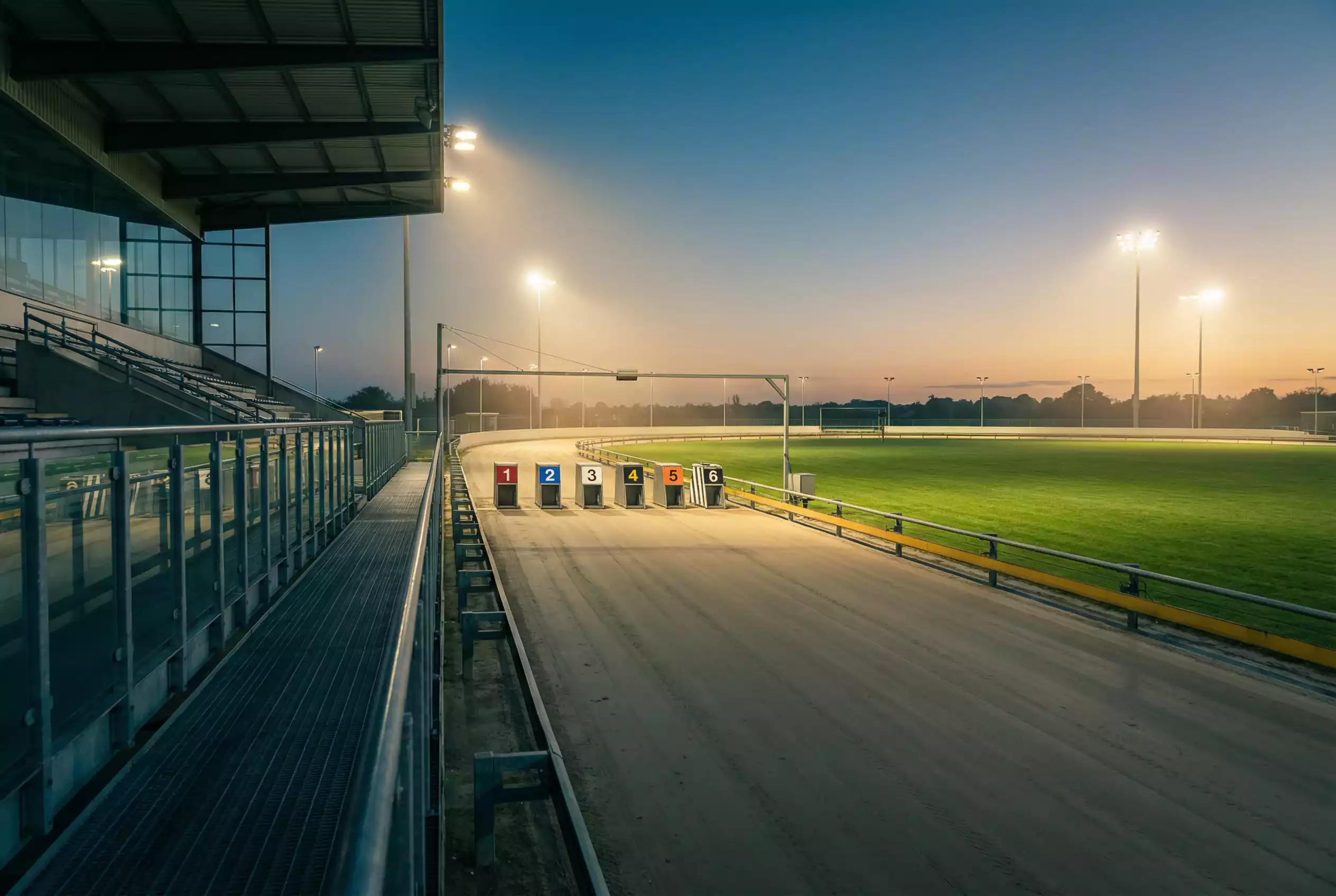
Central Park didn't become Kent's flagship greyhound track by accident. Tucked into the Eurolink Industrial Estate in Murston, a mile north-east of Sittingbourne town centre, the stadium has spent the last decade absorbing the legacy of bigger, fallen venues and turning that inheritance into something distinctly its own. When Wimbledon closed in 2017, Central Park took on the Springbok and the Juvenile. When Towcester collapsed in 2018, it gained trainers like Patrick Janssens who would go on to win Trainer of the Year. And when Arena Racing Company completed a major renovation in 2023 — new surface, recalibrated distances, upgraded facilities — the track stopped being a beneficiary of circumstance and became a destination by design.
For punters following Central Park greyhound results, this matters more than you might think. A results page tells you finishing positions and starting prices. It does not tell you why Trap 6 over 491 metres produces a different pattern than Trap 6 over 277 metres, or why a dog's sectional time from three weeks ago is more relevant than its finishing position. That kind of understanding comes from knowing the track itself — its geometry, its surface, its rhythms — and it is the single biggest edge available to anyone betting on Central Park's meetings.
This guide is built for that purpose. Not a glossy introduction to greyhound racing, but a working resource for anyone who wants to read Central Park results with real comprehension and turn that reading into sharper selections. From trap bias data and distance profiles to bet types, form analysis and staking discipline, everything here is anchored to this track and the dogs that race on it.
Central Park at a Glance
Location: Church Road, Eurolink, Sittingbourne, Kent ME10 3SB
Operated by: Arena Racing Company
Opened: 1995 (as Sittingbourne Stadium; renamed Central Park in 2016)
Racing schedule: Monday afternoon, Tuesday evening, Friday morning via SIS; Saturday evening
Standard distances: 277m, 491m, 664m, 731m
Surface: All-weather (installed 2023)
Category One events in 2026: ARC Cesarewitch (731m), ARC Kent Plate (491m), Kent Silver Salver (277m), Premier Greyhound Racing Kent Derby (491m)
Capacity: Approximately 6,000
How Central Park Results Are Structured
A result line tells you more than who won. Every Central Park result is a compressed data packet, and reading it properly is the difference between knowing the outcome and understanding the race. Whether you are checking results from a Monday afternoon SIS card or a Saturday evening meeting under floodlights, the structure remains consistent — though the depth of available data does not.
Each race result includes the race number, distance, grade (such as A3, B2 or an open race designation), and the going description, which at Central Park is largely stable thanks to the all-weather surface installed in 2023. The six runners are listed by trap number, each assigned a standard colour: red for Trap 1, blue for Trap 2, white for Trap 3, black for Trap 4, orange for Trap 5, and black-and-white stripes for Trap 6. Finishing positions are accompanied by distances beaten — expressed in lengths and fractions — and running comments that describe how each dog ran: whether it led from the first bend, was slow away, got bumped on the turn, or challenged on the run-in.
The numbers that matter most sit alongside each dog's performance.
Sectional time — the split time recorded at specific points during the race, typically at the first bend and the finishing line, used to assess a dog's early pace and overall speed independent of finishing position.
These sectional times let you compare dogs across different races even when finishing positions are misleading — a dog that finishes third in an A1 race might have posted a faster sectional than the winner of a B3. The starting price (SP) is recorded for each runner, along with forecast and tricast dividends for the race, which reflect the payout for correctly predicting the first two or three dogs home.
Morning and afternoon meetings at Central Park, broadcast via SIS to betting shops and online platforms, feature graded races with fields drawn from the track's resident training ranks. These cards run Monday, Tuesday and Friday, twelve races per card, with data available through Sporting Life and Timeform. Saturday evening meetings are a different proposition — bigger crowds, open races with visiting dogs, and Category One competition rounds during key calendar dates. SP fluctuations on a Saturday evening are more volatile than on a Tuesday evening, because the money is bigger and the information gap between sharp punters and the general public is wider. A dog that won comfortably on a quiet Monday card may face a completely different challenge stepping up to a Saturday open. The result format is identical; the context is not.
Interactive Tool
Weekly Volume Check, and 664m Record Speed
Check whether the guide's meeting count and "roughly sixty" races actually add up, and convert the 664m track record into real speed.
Calculated Weekly Total
-
-
Meetings/Week
-
Races/Card
-
Guide's Estimate
-
What this guide states in two places without reconciling: the schedule lists four distinct meetings (Monday, Tuesday, Friday via SIS, plus Saturday) at "twelve races per card," then separately calls it "roughly sixty races per week." The direct multiplication gives 48, not 60 — a 12-race gap the guide never explains.
Average Speed
-
-
Distance
-
Time
-
In mph
-
What this guide leaves as distance and time only: "664m... Track record: 40.10 seconds." The average speed is never calculated — it works out to roughly 59.6 km/h (37.0 mph), sustained through six bends of middle-distance racing.
Race Distances and Track Configuration
The 2023 overhaul didn't just change numbers — it changed the track's racing character. When Arena Racing Company invested in a new all-weather surface and recalibrated the distances, the old Sittingbourne track effectively became a different venue. Distances that had been registered for years were replaced by new measurements reflecting the actual geometry of the resurfaced circuit, and the result is a track that rewards a wider range of running styles than the old configuration allowed.
Central Park's circumference measures 443 metres, with four bends and a race circuit that runs anti-clockwise. The standard distances now in use are 277 metres (a sprint held over two bends), 491 metres (the workhorse distance, roughly equivalent to the standard 480-metre trip used at most UK tracks), 664 metres (a middle-distance test involving six bends), and 731 metres (the staying distance used for the ARC Cesarewitch). Marathon distances of 916 metres and 946 metres are also registered, though these appear less frequently on the card.
277m
Sprint. Two bends. Favours early pace and clean trap breaks. Low tactical complexity — raw speed and reactions dominate.
491m
Standard trip. Four bends. The bread-and-butter distance at Central Park, used for most graded races and the Kent Derby. Rewards balanced dogs with pace and stamina.
664m
Middle distance. Six bends. Greater tactical depth. Dogs that settle early and finish strongly outperform pure speedsters. Track record: 40.10 seconds.
731m
Staying trip. Cesarewitch distance. A true stamina test where pace alone is not enough. Mongys Wild set the current track record of 43.64 seconds in January 2026.
The all-weather surface is the most significant change from the old track. Unlike traditional sand surfaces that shift with weather and produce variable going descriptions, this surface delivers consistent running conditions year-round. Times recorded in November are broadly comparable to times recorded in June — that is not the case at sand-based venues. For punters, sectional comparisons across meetings are more trustworthy at Central Park than at most other UK tracks.
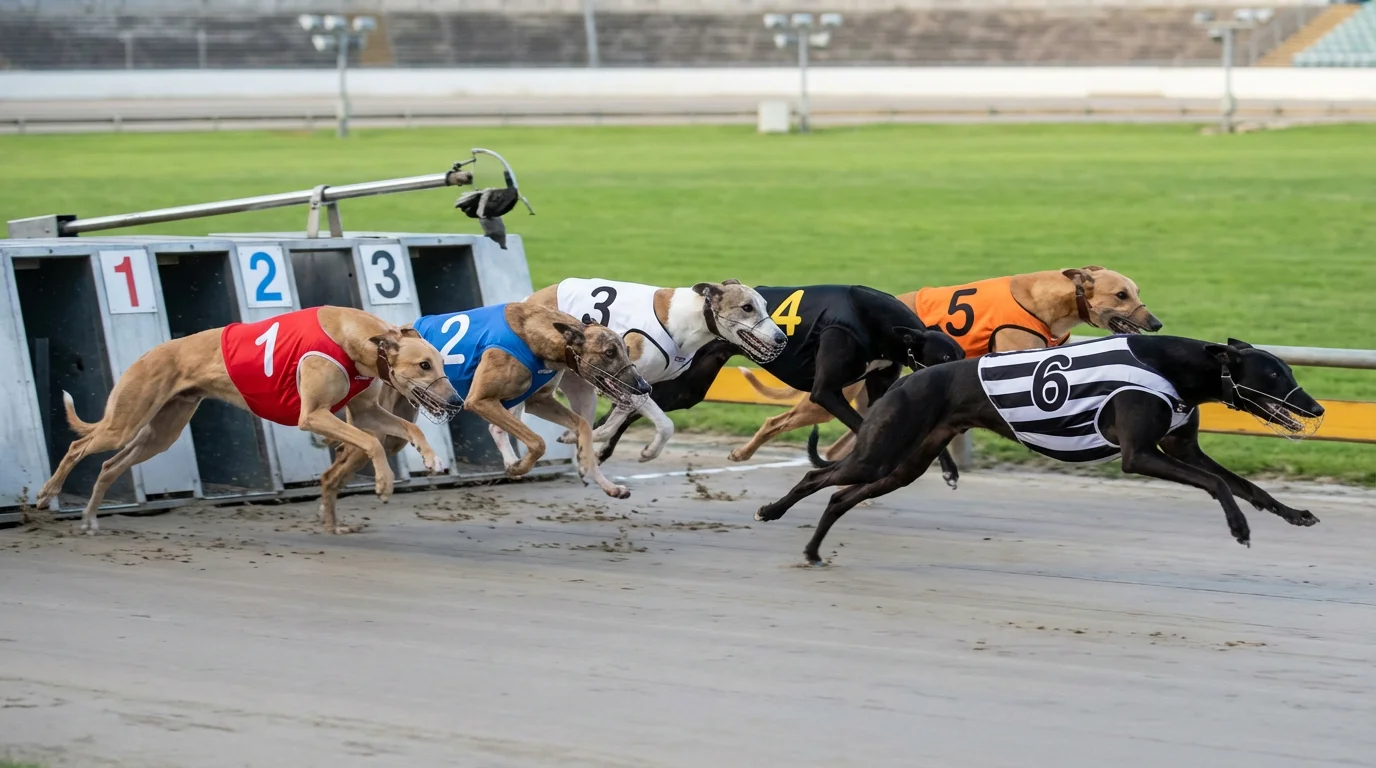
The track's bend geometry also matters. Central Park is widely regarded as one of the fairer tracks in the country, with sweeping bends that don't punish wide runners as aggressively as tighter circuits like Romford or Crayford. That said, the run from the traps to the first bend still plays a decisive role at every distance, and the inside draws retain an advantage at 277 metres where the first bend arrives almost immediately after the break.
Trap Draw Bias at Central Park
Every greyhound track has a personality, and at Central Park that personality is relatively even-tempered. Compared to venues like Romford, where inside traps dominate sprint distances with statistical authority, Central Park's geometry distributes advantage more equitably across the six traps. But "more equitably" does not mean "equally," and understanding the subtle biases at each distance is where punters find edges the market doesn't always price in.
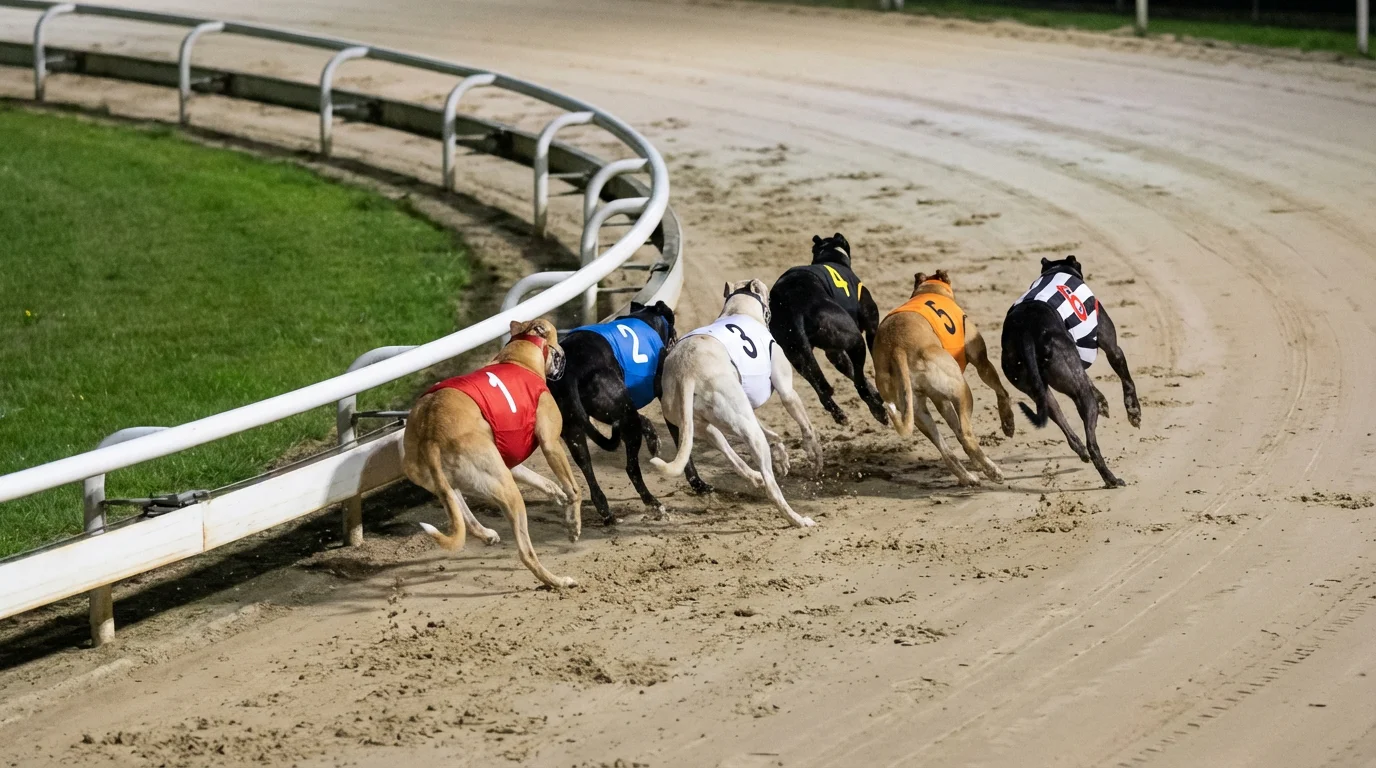
Trap bias is a product of physics. Six dogs break from staggered boxes and funnel toward a first bend that accommodates two or three abreast. Inside dogs have less ground to cover to reach the rail; outside dogs have more room but a longer path. At Central Park, the wide sweeping bends soften the inside advantage that dominates tighter circuits, but they don't eliminate it.
What the Numbers Say: Trap Win Percentages
Trap 1 at Central Park isn't the gift it looks like on paper. Over short distances, it has a marginal edge — the proximity to the rail and the tight run to the first bend at 277 metres means a clean-breaking Trap 1 dog can establish position without interference. But over 491 metres and beyond, that advantage diminishes. The first bend is further away, giving middle and outside draws more time to find racing room, and Central Park's generous bend radius means wide runners are not pushed as far off the racing line as they would be at a cramped track.
Across a large sample of graded races at the standard 491-metre distance, the win percentages by trap typically cluster between 14 and 19 per cent, with Traps 1 and 2 at the higher end and Traps 5 and 6 slightly below the 16.7 per cent average you would expect in a perfectly balanced six-dog race. The gap is real but modest — a two or three percentage point difference, not the seven or eight point swings you see at Romford over 400 metres.
Worked Example: Evaluating Trap 3 at 491m
Suppose your form analysis has narrowed a 491m A3 race down to two dogs: one drawn in Trap 2 with solid recent form, and another in Trap 3 with slightly better sectional times but a middle draw. Over a sample of 500 graded races at 491 metres, Trap 2 wins approximately 18% of the time and Trap 3 wins approximately 16.5%. That 1.5 percentage point gap translates to roughly one extra win in every 67 races. In isolation, it is not enough to override stronger form — but in a race where the form is close, that marginal positional advantage could justify siding with the dog drawn inside.
At 664 metres and beyond, the trap draw matters less in absolute terms because the longer distance introduces more variables — stamina, the ability to find position through multiple bends, and the closing speed that determines the finish. A dog's running style becomes far more important than its starting box when the race involves six bends rather than two.
How to Factor Trap Draw Into Your Selections
A trap number is context, not a verdict. The punters who lose money on trap bias are the ones who treat it as a standalone system — backing Trap 1 in sprints because the percentages say it wins more often, without checking whether the dog in that box has the early pace to exploit the advantage. A slow-breaking dog in Trap 1 is worse off than a fast-breaking dog in Trap 4, because it will be swallowed up by the field before it can establish rail position.
The right way to use trap data is as a tiebreaker, not a foundation. Start with form. Identify the dogs you think have the strongest claims based on recent results, sectional times and grade context. Then, and only then, check whether the trap draw supports or undermines your assessment. If two dogs are inseparable on form and one has the inside draw at a distance where the inside bias is statistically real, that is a meaningful edge. If one dog has clearly superior form but a wide draw, the form should win the argument almost every time.
Trap draw matters most in competitive graded races where the quality gap between runners is narrow. In an A3 race over 491 metres where four of the six dogs have a realistic chance, the draw can genuinely influence the result. In an open race where one dog is two grades above the rest of the field, the class gap renders the trap number almost irrelevant. The best dog will find a way to win from any box — it is in the tight, contested races where geometry earns its keep.
Greyhound Bet Types for Central Park Racing
Greyhound racing offers a wider range of bet types than most casual punters realise, and the six-dog field creates opportunities that don't exist in horse racing's larger fields. At Central Park, the same meeting might feature tight A3 graded races where a forecast is the smartest play, and one-sided affairs where a simple win bet is the only logical option. Knowing which bet to place is as important as knowing which dog to back.
Win, Place and Each Way Bets
Every greyhound bet starts with a simple question: will this dog finish where I need it to? A win bet is the purest answer — your dog crosses the line first, you collect. A place bet broadens the target to the first two finishers, but at reduced odds (typically one-quarter of the win price in a standard six-dog race). An each way bet combines both: it's a double-stake wager, half on the win and half on the place, meaning you collect a smaller return if your dog finishes second even if it doesn't win.
The maths of each way betting in greyhound racing is less generous than many punters assume. At odds of 3/1, an each way bet returns a profit only if the dog wins — the place portion at 3/4 barely covers the total stake. Each way begins to offer genuine value at around 4/1 and above, where the place return becomes meaningful even in defeat. For short-priced favourites at 6/4 or evens, each way is a waste of money; the place return is negligible and you are better off either backing to win or not betting at all.
When does each way make sense? When you have identified a dog with a strong probability of finishing in the top two but whose win probability is genuinely uncertain — perhaps a consistent placer stepping up in grade, or a dog returning from a break with question marks over its fitness but solid underlying ability.
Forecast and Tricast Betting
Forecasts are where greyhound betting gets interesting — and expensive. A straight forecast requires you to predict the first and second dog home in the correct order. Get it right and the dividend is calculated by a computer formula that reflects how unlikely the combination was according to the starting prices. The more surprising the result, the bigger the payout.
A reverse forecast covers both possible orders of your two selected dogs (A first, B second and B first, A second) for twice the stake. A combination forecast extends to three or more selections, covering all possible first-and-second permutations — three dogs produce six combinations, four dogs produce twelve, and the cost escalates accordingly.
Example Bet
Straight Forecast: Dog A (Trap 2) to finish 1st, Dog B (Trap 5) to finish 2nd
Stake: 1 unit
If Dog A wins at SP 3/1 and Dog B finishes second at SP 5/1, the computer-calculated dividend might return approximately 25/1 to 30/1 depending on the SP of the other runners. The less fancied the two dogs, the higher the forecast dividend.
Tricast betting raises the difficulty further — predict the first three finishers in exact order. A straight tricast costs one unit; a combination tricast covering three dogs in any order costs six units. Add a fourth dog and the cost jumps to 24 units. Tricasts regularly produce dividends in the hundreds, but the strike rate is low enough that they should be treated as a selective weapon rather than a routine bet.
The best forecast and tricast opportunities arise in competitive graded races where two or three dogs have clear form advantages over the rest. If you can identify the top two but the order is uncertain, a reverse forecast is the disciplined play. If the race has a clear favourite but the places behind it are open, a combination tricast banking the favourite with two or three others can produce excellent value.
Accumulators and Multiple Bets
The allure of a four-fold at the dogs is hard to resist. Compounding odds across multiple races transforms small stakes into headline-worthy returns, and bookmakers know this — which is why they promote accumulators so aggressively and offer boosts and insurance deals that make the maths look more favourable than it is.
A double links two selections; both must win for the bet to pay out. A treble adds a third. An accumulator (or acca) extends to four or more legs, and with each addition the probability of winning drops sharply. In a six-dog race where your selection has a roughly 33% chance of winning, a four-fold accumulator has a theoretical success rate of about 1.2%. The odds are attractive precisely because the probability is not.
Named multiples offer a safety net of sorts. A Trixie (three selections: three doubles and a treble) pays out if only two of your three dogs win. A Patent adds three singles for seven bets total. A Yankee covers four selections across eleven bets; a Lucky 15 adds four singles for fifteen bets. These full-cover bets reduce the risk of total wipeout but multiply the stake — a Lucky 15 at two pounds per line costs thirty pounds.
The disciplined approach to accumulator betting at the greyhounds is to keep legs short (two or three maximum), select only races where you have a strong opinion, and treat the acca budget as a separate, expendable portion of your bankroll. If you are adding legs to an accumulator for the sake of longer odds rather than genuine conviction, you are not betting — you are buying a lottery ticket with worse transparency.
Reading Form at Central Park
Form figures are a compressed story — you just need the vocabulary to read them. Every dog running at Central Park carries a sequence of recent results and race comments that, taken together, describe its current ability, its tendencies, and the context in which it has been competing. Learning to decode this information is the single most valuable skill in greyhound betting, and it is one that improves with repetition.
What the Form Figures Tell You
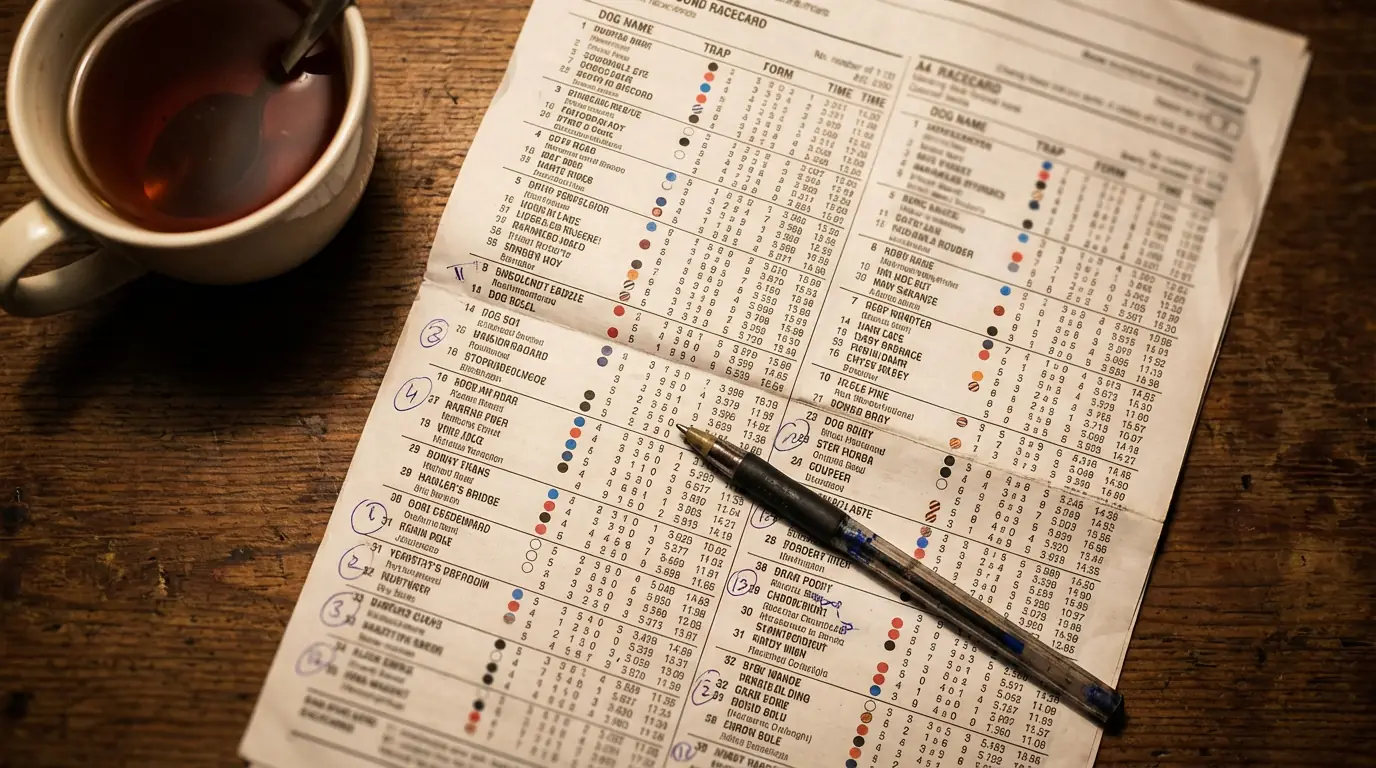
A form line for a Central Park greyhound might read something like 3-1-2-4-1-6. Those numbers represent finishing positions in the dog's most recent races, with the most recent on the right. At a glance, this dog has won twice in its last six runs, placed second once, and had a poor run last time out. But finishing positions are only the start.
Alongside each result, the racecard provides a running comment using standard abbreviations. These are the compressed race reports that tell you how the dog ran, not just where it finished. The most common abbreviations and their meanings carry significant weight in form analysis.
Led
Led the race — made all or most of the running from the front. Indicates early pace and a front-running style.
SAw
Slow away — missed the break from the traps. Can be a one-off or a recurring habit. Repeated SAw comments suggest a trap issue.
EP
Early pace — showed speed in the early stages. A dog consistently marked EP is likely to be competitive from the first bend.
Bmp / Ck
Bumped or checked — interfered with during the race. Important because it means the finishing position may not reflect the dog's true ability.
Wide / Mid / Rls
Racing line descriptions. Wide ran the outside path, Mid stayed in the middle of the track, Rls (rails) hugged the inside. Critical for matching running style to trap draw.
RanOn / ChlNrLn
Ran on indicates the dog was finishing strongly. ChlNrLn (challenged near line) means it was closing fast at the end. Both suggest the dog may benefit from a step up in distance.
The distance beaten also deserves attention. A dog beaten a neck into second effectively ran to the same level as the winner. A dog beaten eight lengths into fourth was in a different race entirely. When two dogs from different races meet, comparing margins of victory and defeat — adjusted for grade — gives a more honest picture than raw finishing positions.
Going Beyond the Basics: Pace, Style and Class
Speed alone doesn't win races — position does. A dog that traps brilliantly and leads into the first bend controls the race, regardless of whether its raw speed is the best in the field. A dog that breaks slowly and negotiates traffic through the bends may have superior ability but never gets a clean run. Understanding how pace and running style interact with the trap draw is where form reading shifts from data entry to genuine analysis.
At Central Park, dogs fall into three running style categories. Railers hug the inside line, saving ground on bends and performing best from Traps 1 and 2. Wide runners naturally drift outside, which can help when the inside is congested but adds distance. Mid-track dogs are adaptable but lack the positional certainty of committed railers or wide runners.
Early pace is the most consistently undervalued factor in greyhound form. A dog marked EP in its comments is one that reaches the first bend in a forward position, and at Central Park's 491-metre distance that first bend is where most races are decided. Between two dogs with similar recent results, the one with stronger early pace is almost always the safer selection.
The UK grading system runs from A1 (the highest standard at a given track) down to D4, with each grade representing a band of ability. Dogs move between grades based on recent results — winners get moved up, consistent losers drop down. The key insight for bettors is that grade movement tells you about trajectory. A dog dropping from A2 to A3 after a string of moderate runs is not the same proposition as a dog rising from B1 to A3 after consecutive wins. The form figures might look similar, but the direction of travel is different, and it affects how you assess their chances in the next race. Open races sit outside the grading structure entirely and attract the best dogs from multiple tracks — the form context is completely different, and graded form should be treated with caution when applied to open race fields.
Understanding Odds and Finding Value
If you can't define value, you're not betting — you're guessing. The concept is straightforward in theory and relentlessly difficult in practice: value exists when the odds offered on a dog imply a lower probability of winning than your own assessment suggests. If you believe a dog has a 30% chance of winning and the bookmaker is offering 4/1 (which implies a 20% chance), you have found value. If the bookmaker is offering 2/1 (implying 33%), you have not.
Greyhound odds in the UK are predominantly displayed as fractions — 3/1 means you win three pounds for every one pound staked, plus your stake back. Decimal odds (4.0 for 3/1) are increasingly available on online platforms and are simpler for calculating returns: stake multiplied by decimal odds equals total return. Converting between formats is worth mastering because it makes comparing prices across bookmakers faster and reduces the risk of miscalculating potential returns.
The starting price (SP) is the odds available at the moment the traps open, determined by the on-course market. For most punters betting online, the key question is whether to take an early price or let it go to SP. Early prices are available hours before the race, and if you believe a dog is overpriced in the morning, locking in that price protects you against a market move. Best odds guaranteed (BOG) removes much of the dilemma — bookmakers who offer BOG on greyhounds will pay you at whichever is higher, the price you took or the SP. Not all firms extend BOG to greyhound racing, and those that do often restrict it to SIS and BAGS meetings, but where it is available it is the single most punter-friendly mechanism in the sport.
The Tote operates a pool betting system alongside the fixed-odds market. Tote dividends are determined by the total pool of stakes divided among winning ticket holders, minus the operator's deduction. Tote returns can sometimes exceed fixed-odds payouts, particularly when the result is unexpected. For forecast and tricast bets, the computer straight forecast (CSF) and computed tricast dividends use a formula based on the SPs of all runners.
Finding value at Central Park requires building your own odds assessment before checking the bookmakers' prices. Study the form, assess the trap draw, factor in running styles and pace, and arrive at your own probability estimate. If the price is longer than your assessment justifies, you have a value bet — regardless of whether the dog wins that specific race. Value betting is a long-term strategy, not a single-race judgement, and it only works with honest assessments and disciplined staking.
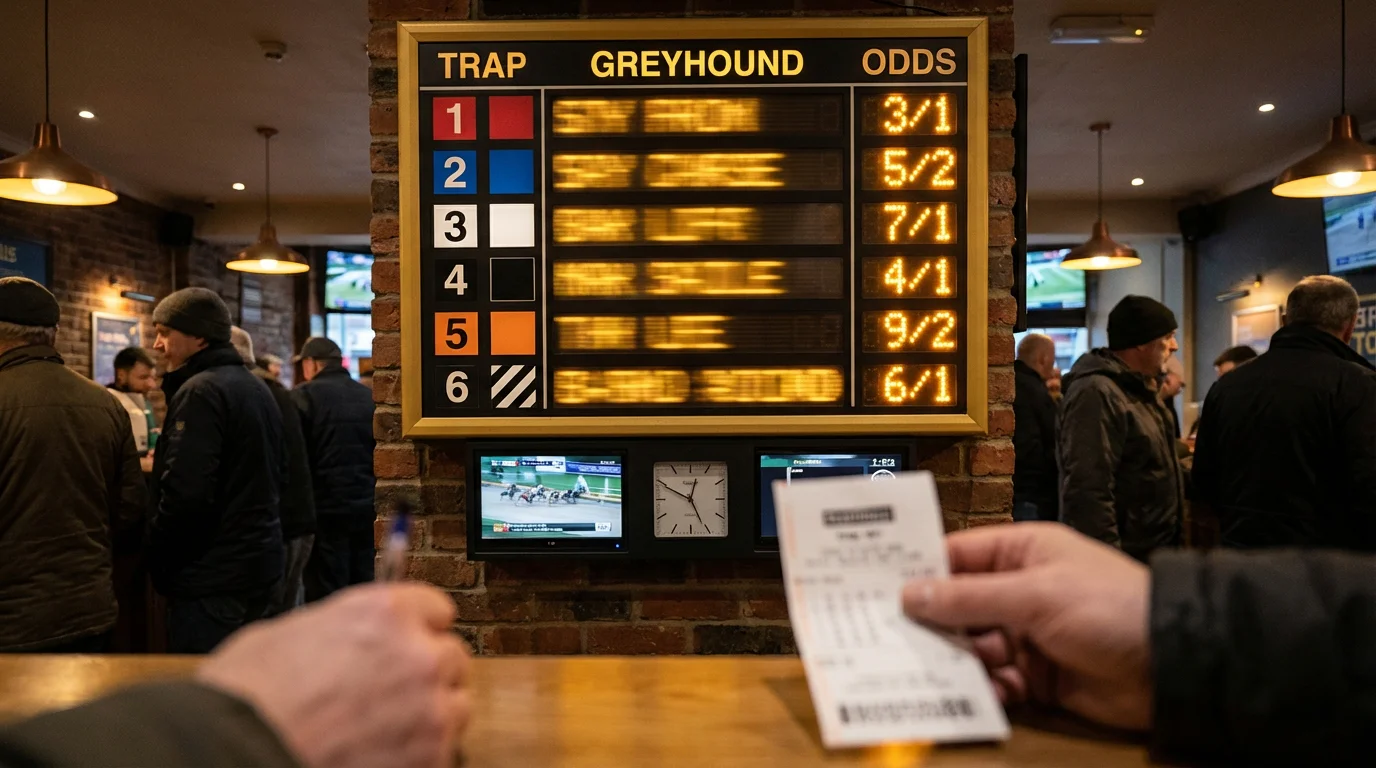
Value is not about backing winners — it is about consistently betting at prices that exceed the true probability. Over hundreds of bets, this approach produces profit even with a modest strike rate, because the average return per winner outweighs the cumulative cost of losers.
Betting Strategy for Regular Central Park Punters
Strategy at the greyhounds is not a system you download or a formula you apply. It is a set of habits — some of them about money, some about attention, all of them about discipline. The punters who show a profit over a racing year at Central Park are not the ones with secret knowledge; they are the ones who manage their stakes, record their bets, and resist the gravitational pull of chasing losses on the last race of the evening.
Bankroll and Staking Plans
The first rule of sustainable betting is knowing how much you can lose tonight. Before you study a single racecard, set a figure — your session bankroll — and accept that losing all of it is a realistic outcome. If that number makes you uncomfortable, reduce it until it doesn't. Greyhound betting should be funded from disposable income, never from money allocated to rent, bills, or anything else that matters more than the dogs.
Level staking is the simplest and most robust plan for the majority of punters. Pick a unit size — typically between one and two per cent of your total bankroll — and stake that amount on every bet, regardless of how confident you feel. The temptation to increase stakes on "certainties" is powerful and almost always destructive, because certainties in six-dog racing do not exist. The favourite wins roughly 30% of the time across UK greyhound racing; that means it loses 70% of the time.
Percentage staking adjusts your unit size to your current bankroll: if you start with a hundred pounds and stake two per cent, your first bet is two pounds. If losses reduce your bank to eighty pounds, your next bet drops to one pound sixty. The bank never runs to zero because the stake shrinks as it does. The Kelly Criterion — a mathematically optimal staking formula — is theoretically elegant but practically unreliable in greyhound racing, because it requires accurate probability estimates that are extremely difficult to produce in six-dog fields.
Pre-Session Checklist
- Set a session bankroll and do not exceed it under any circumstances
- Decide your unit stake before the first race
- Review the full racecard for the meeting — not just the races you plan to bet on
- Identify which races offer genuine value and which are best left alone
- Check for non-runners and reserve replacements, which can alter trap draw dynamics
- Confirm whether your bookmaker offers BOG on this meeting
- Set a loss limit: if you lose your session budget, stop
Tracking results is unglamorous but essential. Record every bet — the date, race, selection, odds, stake, and outcome — in a spreadsheet or dedicated app. Over time, this data reveals patterns that are invisible in real time: which distances you assess best, which bet types produce the highest return on investment, and whether your strike rate justifies your staking level. Without records, you are relying on memory, and memory is unreliable and biased toward the wins you remember.
Specialise to Gain an Edge
You don't need to know every track — you need to know one track better than the bookmaker does. The bookmaker's odds for a Tuesday evening card at Central Park are generated by traders who also price Romford, Hove, Crayford, Monmore and a dozen other tracks on the same day. Their knowledge is broad but necessarily shallow. A punter who watches every Central Park meeting, tracks every trainer's form, and knows which dogs handle which traps at which distances has an information advantage that no algorithm fully captures.
Specialisation works at Central Park because the track offers enough volume to be useful. With three SIS meetings and a Saturday evening meeting every week, there are roughly sixty races per week to study. That is enough data to identify patterns — which trainers are on hot streaks, which dogs are improving, which grades are producing the most competitive fields — without the noise that comes from trying to follow five tracks simultaneously.
The trainers at Central Park form a relatively stable community. Handlers like the Mavrias family, Barry O'Sullivan, Dave Puddy, and Julie Luckhurst have dogs racing at the track every week, and their training patterns become readable over time. A trainer who consistently produces fast early-pace dogs will approach a sprint differently to one whose dogs tend to close late. These patterns are not published in any racecard, but they are visible to anyone who pays attention across multiple meetings.
The single-track approach
Pick Central Park. Watch every meeting for a month, even the ones you don't bet on. After four weeks, you will know the regular dogs by name, the trainers by tendency, and the track by instinct. That foundation is worth more than any tip sheet or statistical model, because it is built on direct observation — and it is not available to punters who spread their attention across half a dozen tracks.
Where to Watch Central Park Races Live
You don't have to be in Sittingbourne to watch the action. Central Park's racing is widely available through broadcast and streaming platforms, though the route depends on the meeting type and whether you hold an active betting account.
Sky Sports Racing is the primary television home for UK greyhound racing, and Saturday evening cards from Central Park — including Category One finals — are regularly broadcast live. The channel is available through Sky TV packages and NOW TV passes, and it provides studio coverage with pre-race analysis, market moves and replays.
For weekday SIS meetings, the most accessible route is through bookmaker streaming. Firms including bet365, Betfair, Paddy Power, William Hill and Coral offer live streams of SIS-covered meetings on their websites and apps. You generally need a funded account or a small qualifying bet to access the stream, but the threshold is low and the coverage is comprehensive — every race from every SIS meeting is available through at least one major platform.
Racing Post Greyhound TV provides an alternative for dedicated followers, with racecards, results, and video replays available through their website. Replays are particularly useful for form study — watching how a dog ran is significantly more informative than reading a running comment, and replays from recent Central Park meetings are usually available within hours of the race finishing.
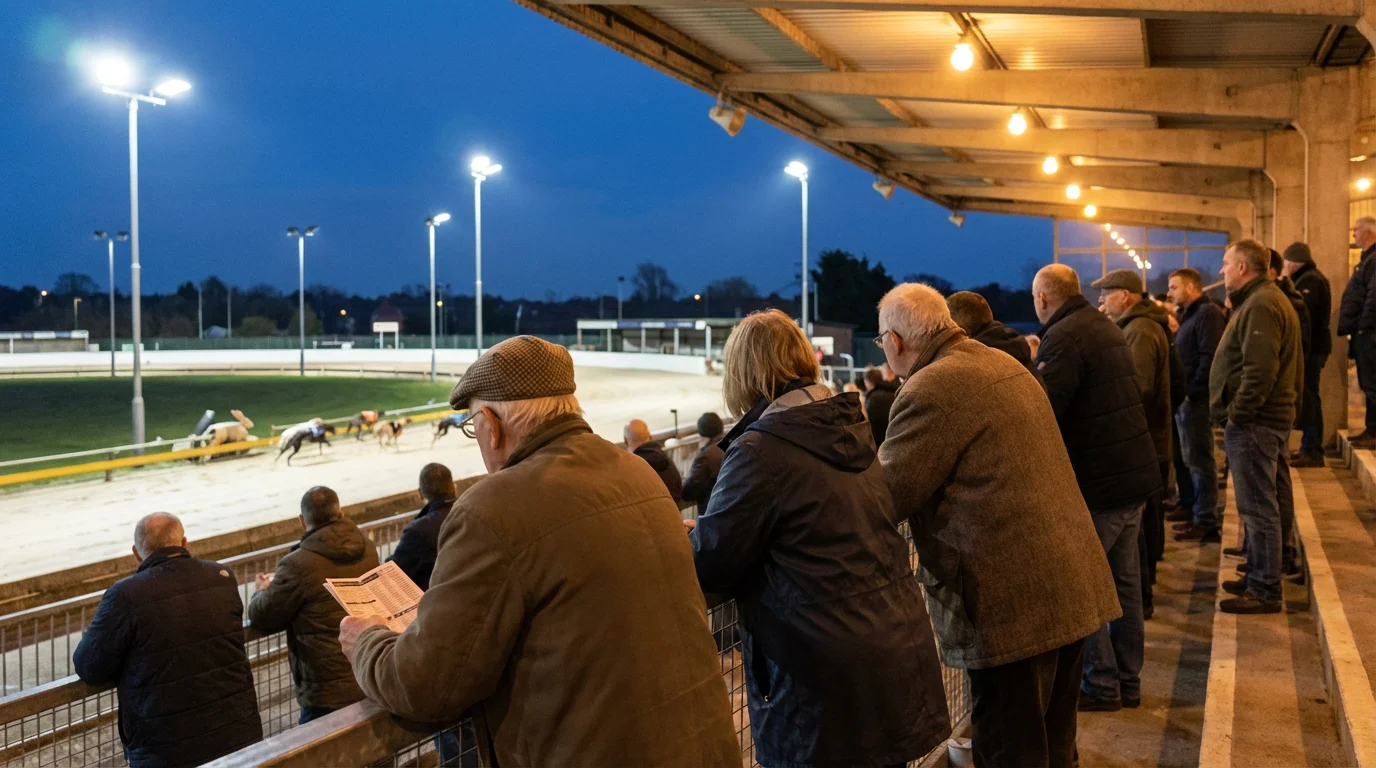
For anyone attending in person, Central Park's Saturday meetings have doors opening at 4.30pm. The stadium offers trackside viewing, a restaurant with panoramic track views, private suites and bar facilities. Admission for major competition finals in 2026 has been set at free entry for advance online bookings — a gesture tied to greyhound racing's centenary celebrations in the UK this year. Standard Saturday evening admission is ten pounds for adults.
Responsible Betting at the Dogs
Betting is entertainment with a cost — make sure you know yours. Greyhound racing moves fast, with twelve races per card and intervals of less than twenty minutes between them. That tempo makes it easy to chase losses, increase stakes impulsively, and spend more than you intended before the evening is over. The tools to prevent that exist, but you have to use them before you need them, not after.
Every major UK bookmaker offers deposit limits, loss limits, and session time reminders. Set them when you create your account, not when you are on a losing run and looking for the brake pedal. Deposit limits cap the amount you can add to your account over a given period (daily, weekly, or monthly). Loss limits do the same for net losses. Reality checks prompt you at fixed intervals — thirty minutes, sixty minutes — to tell you how long you have been active and how much you have spent. None of these tools affect your ability to win; they only affect your ability to lose more than you planned to.
Self-exclusion is available for anyone who feels their betting is becoming a problem. The GAMSTOP scheme lets you exclude yourself from all UKGC-licensed online gambling sites for a minimum of six months. In-person, you can request self-exclusion directly from the track.
Support and resources
If you or someone you know is struggling with gambling, free and confidential support is available. GamCare provides information, advice and counselling through its helpline at 0808 8020 133 and via www.gamcare.org.uk. The GambleAware website at www.begambleaware.org offers further guidance, self-assessment tools and links to local support services. You do not have to be in crisis to reach out — early contact is always better than late.
The purpose of this guide is to help you bet more intelligently, not more often. If anything in these pages encourages you to bet beyond your means or outside your comfort zone, you are reading it wrong. Set your limits. Stick to them. Treat the dogs as what they are — an evening's entertainment, not a source of income.
Frequently Asked Questions
How do I read a greyhound racecard?
A greyhound racecard lists each dog's trap number and colour, name, trainer, form figures (recent finishing positions), best and last recorded times, weight, sire and dam, and age. The form figures read left to right with the most recent result on the far right. Running comments beneath each form line describe how the dog ran — abbreviations like Led (led the race), SAw (slow away), Bmp (bumped) and Ck (checked) tell you about the dog's behaviour and any interference it encountered. Sectional times, where available, show how fast the dog reached key points during the race and are more useful than finishing positions for comparing ability across different grades. The racecard also shows the grade of the race, the distance, and the prize money. Start by reading the most recent two or three form lines for each dog, then check the running comments for trouble or interference that might explain a poor result.
What is a forecast bet in greyhound racing?
A forecast bet requires you to predict the first and second finishers in a race. A straight forecast names them in exact order — your first selection must win and your second must finish runner-up. A reverse forecast covers both orders for twice the stake, so either of your two selections can finish first as long as the other is second. A combination forecast extends to three or more selections, covering every possible first-and-second pairing from your chosen dogs. Three selections produce six combinations (and cost six units); four selections produce twelve. Forecast dividends are calculated by a computer formula based on the starting prices of all runners, meaning the less fancied your selections are in the market, the higher the payout. Forecasts work best in competitive races where you can confidently identify the top two contenders but the rest of the field is less predictable.
How do greyhound grades work in the UK?
UK greyhound racing uses a letter-and-number grading system to group dogs of similar ability. Grades run from A1 (the highest standard at a given track) through A2, A3 and so on, down through B grades, C grades and occasionally D grades at larger tracks. Each track sets its own grade boundaries based on the times and performances of its resident dogs, so an A3 dog at Central Park is not necessarily the same standard as an A3 at Romford. Dogs move between grades based on results — winners may be upgraded to a higher grade, while dogs that finish consistently out of the places may be dropped. Open races sit outside the grading system entirely and are open to dogs from any track, meaning they typically attract the best available runners. Understanding a dog's grade trajectory — whether it is rising, falling, or stable — is essential for assessing whether its recent form is likely to continue.
The Value in Knowing Your Track
Systems don't win at the dogs. Attention does. If there is a single thread running through everything in this guide, it is that depth of knowledge about a specific track — its distances, its biases, its trainers, its rhythms — produces better betting decisions than any generic approach applied across twenty different venues. Central Park rewards that attention because it offers the raw material: consistent SIS meetings with reliable data, a stable training community, an all-weather surface that makes time comparisons meaningful, and a calendar of Category One events that brings the best dogs in the country to Sittingbourne several times a year.
The track's trajectory under Arena Racing Company has been one of steady elevation. The 2023 renovation gave it a surface and distance profile that match its ambitions, and the 2026 racing schedule — with the ARC Cesarewitch already run in January, the Kent Plate scheduled for March, the Kent Silver Salver in June, and the Premier Greyhound Racing Kent Derby in October — anchors the track firmly in the national calendar. With greyhound racing celebrating its centenary in Britain this year, Central Park is hosting those landmark events with free admission for advance bookings, a deliberate signal that the venue is looking forward, not coasting on what it inherited.
For the punter, none of this matters unless you do the work. Watch the meetings. Track the trainers. Record your bets. Build a picture of this track that is richer than the racecard alone provides, and let that picture guide your selections. The dogs will keep running every Monday, Tuesday, Friday and Saturday. The question is whether you'll be watching closely enough to see what the results are actually telling you.
The best edge in greyhound betting is not a secret — it is the willingness to study one track until the patterns stop hiding and start making noise.
