Morning vs Evening Greyhound Meetings Compared
Best Greyhound Betting Sites – Bet on Greyhounds in 2026
Loading...
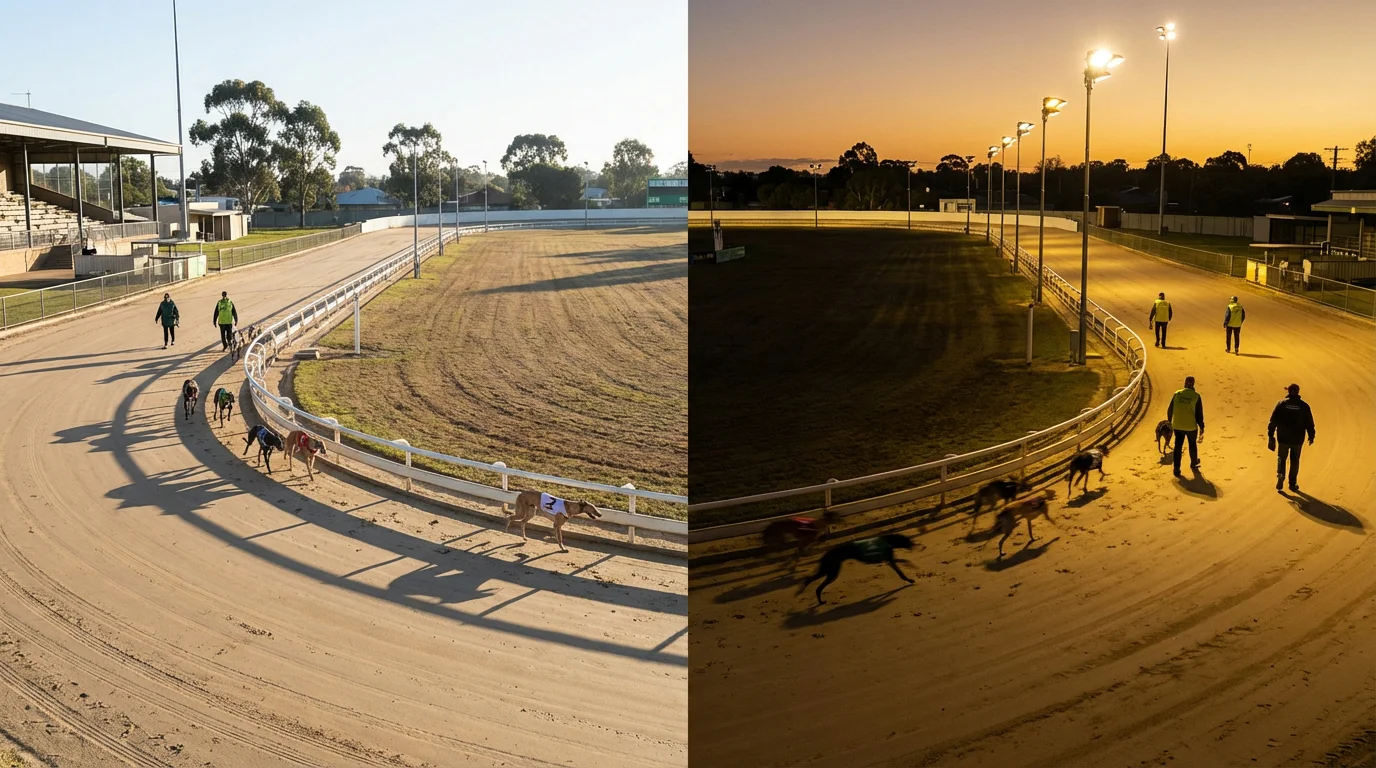
Two Meetings, Two Different Sports
SIS morning meetings and BAGS evening meetings at the same track can feel like they are happening in different countries. The dogs are graded differently, the betting markets behave differently, the bookmaker coverage varies, and the quality of the fields shifts in ways that directly affect how you should approach your selections. Treating a Monday morning Central Park card the same way you treat a Friday evening card is a mistake that costs money quietly and consistently.
This guide breaks down the practical differences between morning and evening greyhound meetings in the UK and helps you decide which format suits your betting style — or whether both deserve a place in your routine.
SIS Morning Meetings: The Weekday Grind
SIS (Satellite Information Services) broadcasts the majority of weekday morning and afternoon greyhound meetings in the UK. At Central Park, regular meetings include Monday afternoons and Friday mornings, with the first race typically at around 10:00 to 11:00 and a card of ten to twelve races completing by early afternoon. These meetings form the backbone of daily greyhound racing and the bulk of the sport’s betting volume by number of races.
The defining characteristic of morning meetings is field quality. The dogs racing on a Tuesday morning SIS card are generally not the same calibre as those competing on the premium evening card. Morning meetings tend to feature lower-graded races — B, C, and D grades — with the better dogs reserved for the higher-profile evening fixtures. This does not mean the racing is uncompetitive; the grading system ensures the dogs within each race are matched on ability. But the overall standard is lower, and the form patterns are different.
Morning meetings also feature a higher proportion of young dogs gaining experience, older dogs on their way down the grading ladder, and dogs from smaller kennels that do not have the strength in depth to compete at the top evening grades. For the form analyst, this means the data is noisier. Young dogs improve between races, older dogs deteriorate unpredictably, and the smaller sample of high-quality form makes confident assessments harder.
Betting markets on morning meetings are thinner. Fewer punters bet on a Tuesday morning card than a Friday evening one, which means the prices are less efficient — the market has less collective intelligence behind it. This is both a risk and an opportunity. Prices can be more volatile, with single bets moving the market disproportionately. But the thinner market also means mispricings are more common, and a punter with solid form knowledge of the specific track can find value that the wider market has missed.
BAGS Evening Meetings: The Main Event
BAGS evening meetings are the premium fixtures in UK greyhound racing. At Central Park, the Saturday evening card is the week’s showcase — better-graded races, deeper fields, larger betting markets, and the meeting with the most significant on-course attendance. Evening meetings at major tracks like Romford, Hove, and Crayford follow the same pattern, with Friday and Saturday nights drawing the strongest cards.
Field quality on evening cards is demonstrably higher. The A-grade and upper-B-grade races that headline an evening meeting feature dogs at the peak of their ability, running in front of on-course crowds and televised audiences. The form data for these dogs is richer — they have longer race histories at the track, their running patterns are well established, and the grading system places them more precisely because the pool of comparable dogs is larger.
Betting markets on evening meetings are deeper and more efficient. More money flows into the pools, more punters have studied the card, and the bookmaker prices reflect a broader consensus of informed opinion. This efficiency means that obvious mispricings are rarer — the market is less likely to overlook a class dropper or underrate a dog with strong recent form. Finding value on evening cards requires sharper analysis and more granular knowledge of the specific track and its runners.
Evening meetings also benefit from better broadcasting. Sky Sports Racing and major bookmaker streaming services cover the BAGS fixtures with higher production quality, including paddock shots, race replays, and occasional expert commentary. For bettors who use visual information — how a dog looks in the parade, its behaviour before being loaded into the traps — the evening meeting provides data that the morning card typically does not.
Field Quality and Odds: A Direct Comparison
The practical impact of the quality difference between morning and evening meetings shows up most clearly in the odds. Morning cards tend to produce wider-priced fields with more variation between runners, because the lower grades include a wider spread of ability within each race. A D3 morning race might feature a clear standout at 6/4 alongside two rank outsiders at 10/1 and 14/1. The form gap between the best and worst dog in the field is larger, creating races where one or two runners are significantly more likely to win.
Evening A-grade races produce tighter markets. The favourite might be 2/1, the outsider of the field 6/1, and the margin between each runner is measurably smaller. These races are harder to call, but when you get them right, the return relative to risk is often more favourable because the market has been unable to identify a clear standout.
Strike rate patterns differ accordingly. Punters betting on morning meetings can expect a higher strike rate on favourites — shorter-priced selections in weaker fields win more often — but the returns per winner are lower. Evening punters accept a lower strike rate in exchange for better prices when their selections deliver. Neither profile is inherently superior; the right one depends on your temperament, your form knowledge, and your staking approach.
Forecast and tricast dividends also behave differently. Morning dividends tend to be more predictable — the form separation in lower grades makes the top-two and top-three finishers easier to identify, producing lower but more frequent dividend returns. Evening dividends are more volatile, with higher peaks when a mid-priced dog finishes in an unexpected position but lower frequency of collection.
Which Format Suits Your Betting Style
The honest answer is that most serious punters bet on both, adjusting their approach for each format rather than choosing one and ignoring the other. But if time or budget forces a choice, the decision hinges on your strengths as a form analyst.
Morning meetings suit punters who have deep knowledge of a specific track’s lower grades. If you follow Central Park’s B, C, and D graded dogs across their weekly outings, you accumulate a volume of track-specific form data that the thinner morning market does not fully reflect. That knowledge asymmetry — you knowing more about the dogs than the average morning bettor — translates directly into value. The races are less glamorous, the dogs less talented, but the betting edge is real for the dedicated specialist.
Evening meetings suit punters who prefer deeper form analysis on a smaller number of races. A Friday evening card of ten races, with stronger fields and richer data, allows for thorough pre-race study of each runner. The market is more efficient, so the edge comes from nuance rather than knowledge gaps — a better reading of pace dynamics, a more accurate assessment of trap draw significance, or a sharper eye for the impact of a class change.
A combined approach uses morning meetings for volume — a larger number of smaller bets exploiting form knowledge in thinner markets — and evening meetings for selectivity, concentrating stakes on fewer, higher-confidence plays in stronger fields. The bankroll allocation might split 60/40 in favour of the format that suits your analysis better, with separate session budgets for each.
Same Track, Different Game
The track is the same. The dogs are different, the markets are different, and the opportunities are different. Central Park on a Wednesday morning and Central Park on a Friday evening are two distinct betting environments that happen to share the same piece of Kent.
The punters who profit from both are the ones who adjust their expectations and their methods accordingly. Lower stakes and higher volume in the mornings. Fewer bets and sharper analysis in the evenings. Separate budgets, separate records, and separate assessments of what constitutes a good opportunity. The track does not change between meetings. Your approach should.