
GBGB Explained: Who Regulates UK Greyhound Racing
 Available in US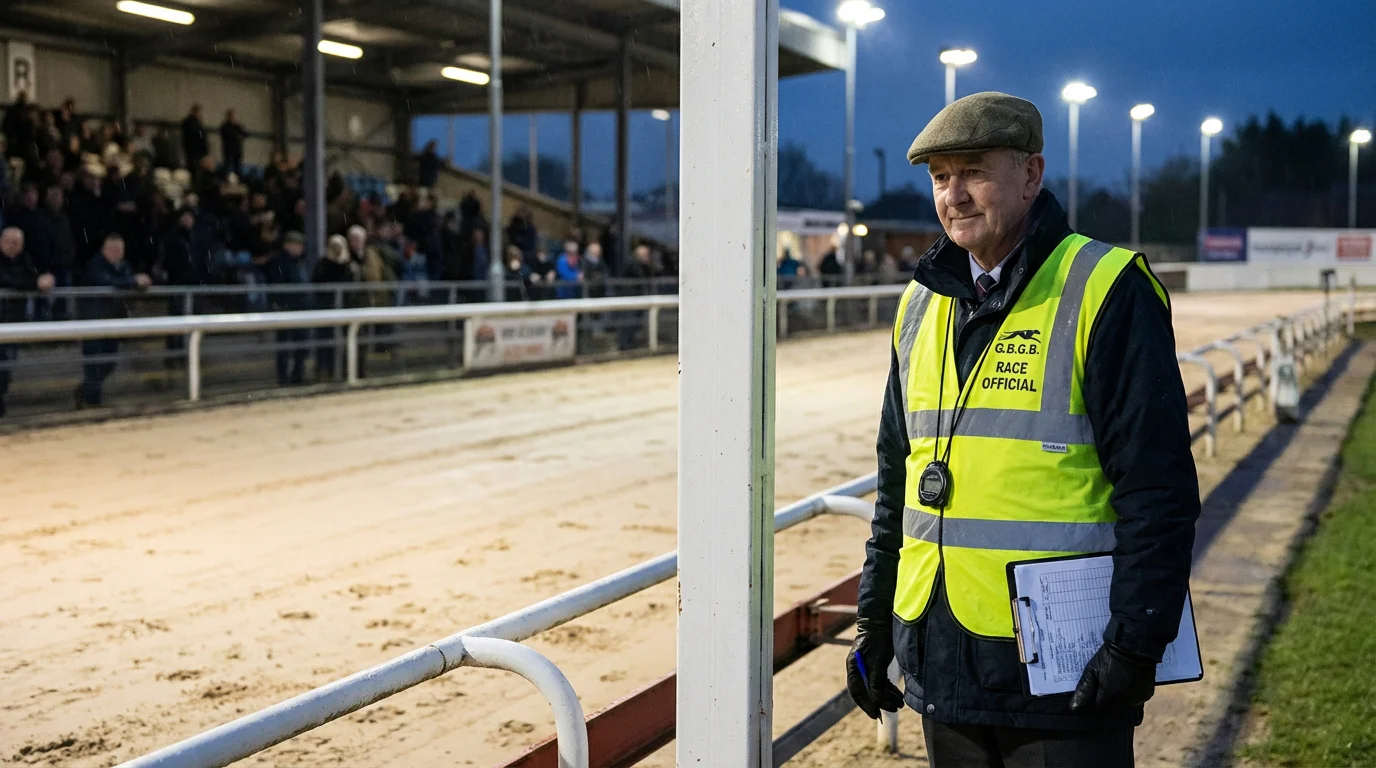
The Governing Body Behind Every Race
Every licensed greyhound meeting in the UK runs under the authority of the Greyhound Board of Great Britain. GBGB is the regulatory body responsible for the rules of racing, the licensing of tracks and participants, the welfare of racing greyhounds, and the integrity of the sport. If you bet on UK greyhound racing, you are betting on a sport governed by GBGB’s framework — and understanding that framework gives you context that casual punters lack.
GBGB is not a household name outside the sport, but its decisions shape everything from the grading of dogs at your local track to the anti-doping protocols that protect the integrity of the results you bet on. This guide explains what the board does, how its regulations affect the racing product, and why it matters to anyone who takes greyhound betting seriously.
What GBGB Does
GBGB operates as the self-regulatory body for licensed greyhound racing in Great Britain (GBGB — About Us). Established in 2009, it replaced the British Greyhound Racing Board and the National Greyhound Racing Club. Its core functions cover four areas: setting and enforcing the rules of racing, licensing tracks and participants, overseeing greyhound welfare, and maintaining the integrity of the sport through anti-doping and disciplinary procedures.
The rules of racing govern every aspect of how a meeting is conducted — race distances, grading criteria, trap draw procedures, starting protocols, and the handling of disputes and objections (GBGB Rules of Racing). These rules ensure consistency across all GBGB-licensed tracks, so a race at Central Park is conducted under the same fundamental framework as a race at Romford, Hove, or Sheffield. For bettors, this standardisation means you can apply the same analytical methods across venues with confidence that the underlying competitive structure is consistent.
GBGB also maintains the official greyhound register, recording every racing dog’s identity, ownership, breeding, and racing history. This registry is the authoritative source of the data that appears on racecards — form figures, dam and sire information, age, and weight records all flow from the GBGB database. The accuracy and completeness of this data is a direct product of the regulatory infrastructure that GBGB provides.
Licensing and Regulation
GBGB licenses the tracks, the trainers, the racing managers, and the kennelhands who participate in the sport. Operating without a licence is not a minor administrative oversight — it places racing outside the regulated framework and removes the protections that the licensing system provides.
Track licensing requires stadiums to meet specific standards for facilities, safety, veterinary provision, and operational procedures. A GBGB-licensed track must have on-site veterinary support at every meeting, adequate kennelling facilities, a functioning photo-finish system, and compliance with the board’s rules on race management. These requirements are not cosmetic — they directly affect the quality and reliability of the racing product. A properly licensed track produces results you can trust; an unlicensed or independent track operates under different (and typically lower) standards.
Trainer licensing is equally significant. Licensed trainers are bound by GBGB’s code of conduct, which covers the care, training, and medication of greyhounds in their charge. The licensing process includes inspections of kennel facilities and ongoing compliance monitoring. A licensed trainer who breaches the rules faces disciplinary action — fines, suspensions, or revocation of their licence — which provides a meaningful incentive to maintain standards.
The distinction between GBGB-licensed racing and independent (or “flapping”) racing matters for bettors. Licensed meetings are the ones covered by major bookmakers, broadcast by SIS and Sky Sports Racing, and subject to the full regulatory framework. Independent meetings operate outside this framework and are not covered by mainstream betting markets. When you bet on greyhound racing through a UK-licensed bookmaker, you are betting exclusively on GBGB-regulated meetings.
Welfare Standards
Greyhound welfare is the most publicly scrutinised aspect of GBGB’s work, and the board has invested considerably in raising standards over the past decade. The welfare framework covers the entire lifecycle of a racing greyhound — from registration and racing career through to retirement and rehoming.
During a dog’s racing career, GBGB regulations mandate veterinary examinations before and after every race, restrictions on racing frequency (dogs must have minimum rest periods between races), and protocols for injury management and treatment. Track veterinarians have the authority to withdraw any dog from a race if they judge it unfit to compete, and this authority is exercised independently of the trainer, owner, or racing manager.
Retirement and rehoming have become central to GBGB’s welfare agenda. The board collects a levy from the sport’s commercial activities to fund rehoming programmes, and it publishes annual data on the number of dogs retired, rehomed, or euthanised. The push toward full traceability — knowing the outcome for every dog that leaves racing — has been a major initiative, driven both by genuine welfare commitment and by the reputational pressure from animal welfare campaigners.
Anti-doping is the intersection of welfare and integrity. GBGB operates a testing programme that samples dogs at meetings across the country, screening for prohibited substances that could enhance or suppress performance (GBGB Integrity & Compliance). Positive tests result in disciplinary proceedings against the trainer, who is held responsible for any substance found in a dog in their care. The doping regulations protect the welfare of the dogs (by preventing harmful substance use) and the integrity of the betting market (by ensuring results are not manipulated through chemical means).
What GBGB Regulation Means for Bettors
The practical relevance of GBGB regulation to your betting is threefold: data reliability, result integrity, and market structure.
Data reliability flows directly from the registration and race management systems. The form figures, finishing times, sectional data, and grading information on your racecard are drawn from GBGB’s regulated infrastructure. You can trust that the dog listed as Trap 3 in tonight’s A3 race at Central Park is the dog it says it is, that its form figures are accurately recorded, and that its grade reflects a systematic assessment of its recent performance. In unregulated racing, none of these assurances exist.
Result integrity is maintained through the anti-doping programme, the disciplinary framework, and the oversight of race management. While no regulatory system is perfect, the GBGB framework provides a meaningful deterrent against manipulation. Bettors can place their bets with reasonable confidence that the races are conducted fairly and that the outcomes reflect genuine sporting competition rather than external interference.
Market structure depends on GBGB licensing. Bookmakers offer odds on GBGB meetings because the regulated framework provides the consistency and reliability that commercial betting requires. The scheduling of meetings, the broadcasting arrangements, the standardised grading system, and the consistent rules of racing all create the stable product that betting markets are built on. Without GBGB, the commercial ecosystem that supports greyhound betting — the bookmaker markets, the streaming services, the form data providers — would not function in its current form.
Regulation Is the Foundation You Bet On
GBGB is not an organisation that most greyhound punters think about on a race-by-race basis, and it does not need to be. Its role is structural — providing the framework within which the sport operates and the betting markets function. But understanding that framework gives you confidence in the data you analyse, the results you bet on, and the integrity of the sport you follow. The rules, the licensing, the welfare standards, and the anti-doping protocols are the invisible architecture that makes informed greyhound betting possible. They deserve recognition, even if they rarely make the racecard.
Stay informed at centralparkgreyhound.
Also read our legal information.
