Central Park Greyhound Track: Distances & Layout
Best Greyhound Betting Sites – Bet on Greyhounds in 2026
Loading...
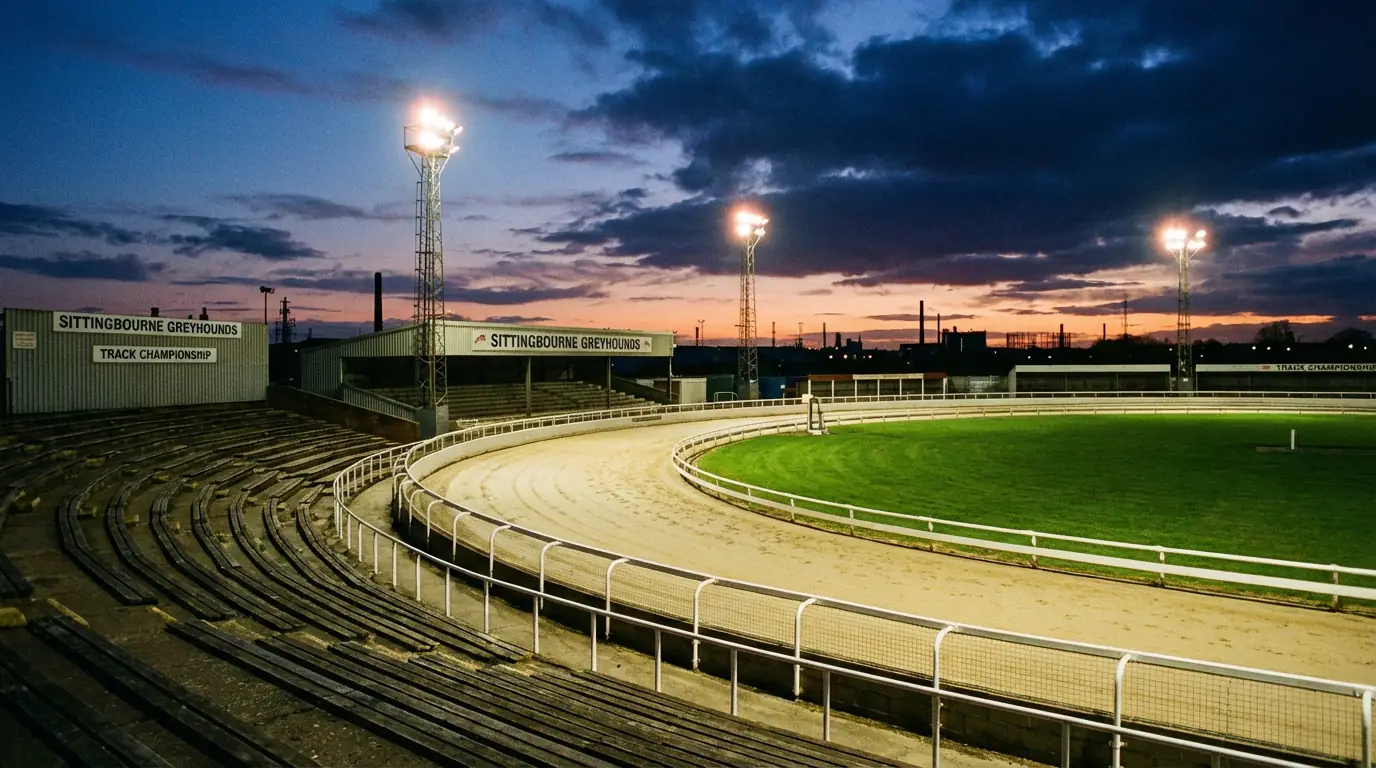
Central Park: Kent’s Greyhound Headquarters
Central Park sits in Sittingbourne, Kent — close enough to London, far enough to breathe. The stadium operates under Arena Racing Company ownership as one of the busiest greyhound venues in south-east England, hosting racing four to five days per week and serving as a regular fixture on the SIS and BAGS broadcasting schedules. For bettors, Central Park is not just another track on the card. It is a venue with distinct characteristics, a growing competition calendar, and a recent infrastructure upgrade that has changed how the track races.
This is a functional profile, not a history lesson. The purpose is to give you the specific information you need to bet on Central Park meetings with confidence: distances, surface behaviour, scheduling, competition structure, and the practical details of attending in person. Every section is aimed at the punter who either already bets on Central Park or is considering adding it to their regular rotation.
Brief History and Key Milestones
The stadium was built for football. Greyhound racing saved it. Central Park was built in 1990 as Sittingbourne Stadium, originally a football ground for Sittingbourne FC. Greyhound racing opened on 3 October 1995 after delays caused by the football club’s financial difficulties and a costly roof design fault, but gradually became the primary revenue generator, a pattern repeated at several UK stadiums where the dogs proved more commercially sustainable than non-league football.
The key milestones for bettors are recent. In April 2021, Arena Racing Company acquired the stadium, bringing it into the UK’s largest commercial greyhound racing operation alongside venues like Romford, Crayford, and Hove. The ARC acquisition signalled serious investment intent — Central Park was no longer an independent track operating on thin margins but part of a national portfolio with media distribution and commercial partnerships.
In 2022, ARC signed a long-term media rights deal with Entain, with broadcasting starting in January 2024, bringing Central Park’s racing into the ecosystem of major bookmaker coverage and significantly increasing the volume of off-course betting on its meetings. In June 2023, the track underwent a major renovation costing £500,000. A new racing surface, base and drainage system was installed in partnership with the GBGB and the Sports Turf Research Institute, and the facilities received a general upgrade. Post-renovation, Central Park is a measurably different racing surface with new race distances — dogs that ran there before 2023 have form that may not directly translate to the current configuration.
Perhaps most significantly for the national profile of the track, Central Park inherited major competition hosting duties from other venues. The Grand National moved from Wimbledon in 2012, and following Wimbledon’s closure in March 2017, the track received the Springbok and Juvenile competitions. Events that previously ran at those venues were reallocated, and Central Park became the home of Category One competitions that it would not have attracted a decade earlier. The trajectory is clear: from local independent to nationally significant venue within five years.
Distances, Surface and Racing Schedule
Post-renovation, Central Park races over five flat distances and one hurdles trip. Understanding the characteristics of each distance is essential for interpreting form and assessing trap draw significance.
The 277-metre sprint is the shortest distance on the card. It is a dash to the first bend and a single turn, with the race essentially decided by trap speed and early positioning. Inside traps hold a moderate advantage because the run to the first bend is short. Sprint form at Central Park is volatile — a slow break from the traps can end a dog’s race before it has properly started, making trapping ability the dominant factor over raw speed.
The 491-metre trip is the standard middle distance and the most commonly raced at Central Park. Two full bends, a sustained run, and enough distance for pace dynamics to develop. This is where form analysis is most productive — dogs have time to recover from minor early setbacks, running style interacts meaningfully with trap draw, and sectional times provide genuine insight into a dog’s ability profile. The majority of graded racing at Central Park takes place over 491 metres.
At 664 metres, the extended middle distance adds additional bends and a longer finishing straight. This trip separates dogs with genuine stamina from those that flatten out after 491 metres. Pace judgement matters more here — front-runners can burn out, and closers have additional track to make up ground. Form over 664 metres is the most reliable predictor of a dog’s class, because the distance punishes weaknesses that shorter trips can hide.
The 731-metre staying distance is Central Park’s marathon trip and the distance at which the Cesarewitch is run. Only dogs with proven stamina compete over this trip, and the fields tend to be smaller and more specialised. Staying races attract a niche betting market where the form book is thinner but the betting angles are often sharper, because fewer punters study staying form in depth.
The all-weather surface at Central Park is a sand-based track that drains well and provides consistent racing conditions across most weather scenarios. Post-renovation, the surface runs true and even, with less variation between inside and outside lines than many older UK tracks. As part of the Premier Greyhound Racing schedule from 2024, Central Park hosts meetings on Monday afternoons, Tuesday evenings, Friday mornings and Saturday evenings. The Saturday evening card is the premium meeting — better-graded fields, larger betting markets, and the meeting with the most significant on-course attendance.
Major Competitions at Central Park
Four Category One events make Central Park matter on the national stage. The track’s competition calendar has expanded significantly since the ARC acquisition, and the headline events now attract entries from leading kennels across the country.
The ARC Cesarewitch is Central Park’s flagship event, run over the 731-metre staying distance. It is one of the most prestigious staying races in UK greyhound racing, first held in 1928 at West Ham Stadium, drawing specialist stayers from across the country. The competition format typically involves heats, semi-finals, and a final, spread over several weeks. For bettors, the Cesarewitch offers unique opportunities: the ante-post market opens well in advance, the heat structure generates valuable form data as the competition progresses, and the final itself is one of the highest-profile betting races of the year. Staying specialists with proven form at Central Park hold a genuine home-track advantage in this event.
The Springbok is the leading Category One competition for novice hurdlers, inaugurated in 1937 at White City Stadium and held at Central Park since 2017. Hurdle racing adds a layer of unpredictability that flat racing lacks — the ability to jump cleanly and maintain speed over obstacles is a distinct skill, and some flat-race specialists are poor hurdlers. The Springbok attracts a smaller, more specialist field than flat competitions, and the betting market reflects that with wider price ranges and higher potential returns for punters who understand the hurdles form book.
The Juvenile Stakes targets young dogs, typically under two years of age, and showcases the next generation of racing talent. Juvenile form is inherently volatile — young dogs improve rapidly between races and their running style can change as they mature physically. For bettors, this volatility creates both risk and opportunity. Prices are wider, upsets are more frequent, and a punter who follows juvenile trials and early career form closely can identify improvers before the market catches up.
Beyond these headline events, Central Park hosts regular graded competition throughout the year, with the quality and depth of fields varying between the morning SIS meetings and the stronger Friday evening cards.
Visiting Central Park: Practical Information
Friday nights at Central Park are as close to old-school dog racing as you will find in Kent. The stadium is located off the A2 in Sittingbourne, with straightforward road access from the M2 motorway. Sittingbourne railway station is approximately a mile from the track, making it accessible from London Victoria or St Pancras with a single change — though services on Friday evenings can be infrequent on the return leg, so checking train times is advisable.
The venue has parking on site, and Friday evening meetings draw a mix of regular punters, casual visitors, and groups treating the dogs as a night out. The trackside restaurant offers dining with a view of the racing, and hospitality packages are available for larger groups. The atmosphere on a busy Friday evening is lively without being rowdy — it is a community venue rather than a corporate arena, and the regulars know the dogs, the trainers, and the track better than most visiting punters will.
For bettors attending in person, the advantage over remote betting is the ability to watch the dogs in the parade ring before each race. Visible condition — coat quality, muscle tone, demeanour, walking gait — provides information that no racecard can capture. Experienced trackside punters often adjust their selections based on how a dog looks on the night, and this in-person assessment is one of the few genuine edges that attending a meeting provides over betting from home.
A Track That Keeps Getting Better
Central Park is no longer a local track with big ambitions — the ambitions are landing. Under ARC ownership, the venue has been upgraded physically, elevated competitively, and integrated into the national media distribution network. The result is a track that offers serious racing at a level that justifies serious betting analysis.
For punters, the practical implication is clear: investing time in understanding Central Park’s specific characteristics — its distances, its surface behaviour, its trap tendencies, its competition calendar — pays dividends that generic greyhound knowledge cannot match. The track has enough racing volume to generate reliable data, enough competition depth to produce meaningful form, and enough profile to attract good dogs from outside the local circuit.
Whether you bet on Central Park remotely through morning SIS meetings or attend the Friday evening BAGS card in person, the edge comes from the same place: knowing the track better than the market does. Central Park rewards that investment more generously now than at any point in its history.